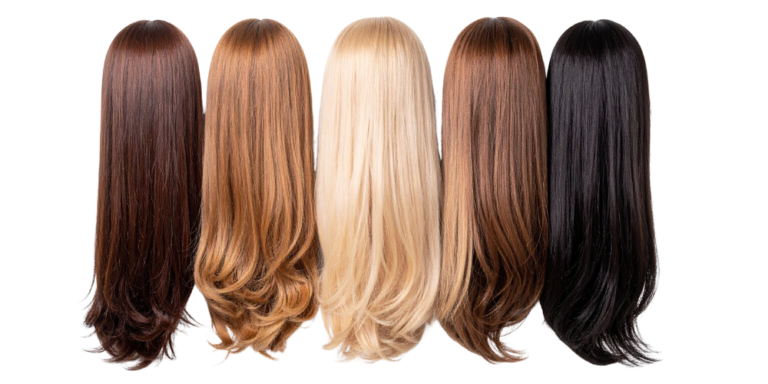

Wig vs. Topper: Which is right for your thinning hair?
Thinning hair can be a deeply personal and often distressing experience. It’s a journey many of us embark on, silently or otherwise, and finding a solution that feels right for you can be transformative. In the world of hair enhancement, two popular options often come to mind: wigs and toppers. Both offer incredible benefits, but they cater to different needs and levels of hair loss. Understanding the distinctions can empower you to make an informed choice that brings back your confidence and helps you feel like yourself again.
The first thing to remember is that you are not alone. Hair loss affects millions of people, for a myriad of reasons – genetics, stress, medical conditions, hormonal changes, and more. There’s no shame in seeking solutions, and embracing hair enhancements can be a powerful act of self-care.
Let’s cover some of the specifics of wigs and toppers.

Understanding Hair Toppers
A hair topper, also known as a top piece or hair integration system, is designed to cover specific areas of hair loss, typically at the crown, part line, or temples. Think of it as a partial wig. Toppers come in various base sizes and shapes to address different patterns of thinning. They are secured to your existing hair with pressure-sensitive clips, combs, or sometimes adhesive.
Who is a topper best for?
Early to moderate hair loss: Toppers are ideal if you have thinning mainly on the top of your head, but still have sufficient hair on the sides and back to blend with the topper and provide a secure attachment.
Targeted coverage: If your hair loss is concentrated in a particular area, a topper offers precise coverage without the need to cover your entire scalp.
Maintaining your own hair: Many individuals appreciate toppers because they allow them to continue to style and care for their natural hair, while simply adding volume and density where needed
Everyday wear: Toppers are often lighter and less “full” than a full wig, making them a comfortable option for daily wear, especially in warmer climates or for those who prefer a more subtle enhancement.
Advantages of Toppers
A Seamlessly natural look: When matched correctly, toppers can seamlessly blend with your own hair, creating a very natural and undetectable appearance. The magic of a topper lies in its ability to let your natural hairline and “bio hair” do the work. Because your own hair remains visible around the perimeter, people aren’t looking at a “hairpiece”—they are looking at your hair, just enhanced.
When you find a topper with a realistic base (like silk or monofilament), it mimics the look of a real scalp so perfectly that someone could stand inches away from your part line and never suspect a thing.
Lightweight Comfort for All-Day Wear: Generally lighter than full wigs, toppers can be very comfortable to wear for extended periods. One of the most significant “pro-topper” arguments is the weight—or lack thereof. Since a topper only covers a portion of the head, it is significantly lighter than a full wig. You don’t have the feeling of a full cap encircling your head or the pressure behind your ears.
Many women find that after ten minutes, they completely forget they’re wearing it. This makes toppers an excellent choice for those with sensitive scalps or those who find the “weight” of a full wig overwhelming.
Styling Versatility and Creative Freedom:
You can still style your natural hair around the topper, and many toppers can be heat-styled if they are made from human hair or heat-friendly synthetic fibres.
Toppers offer a unique “best of both worlds” scenario.

You can pull your natural hair and the topper hair back into a ponytail, use a headband, or braid them together. If you choose a human hair topper, the styling options are endless.
You can use your favourite curling iron or flat iron to match the topper’s texture to your mood. This flexibility allows the piece to evolve with you, whether you’re going for a messy bun or a polished, professional blowout.
Maximum Breathability: With less coverage, toppers often feel cooler and more breathable than a full wig. Because a topper leaves much of your scalp exposed, it allows your skin to breathe.
This is a game-changer for anyone who experiences “hot flashes” or lives in a tropical climate. There is no trapped heat at the nape of the neck or the sides of the head. It’s the ultimate “cool” solution for summer weddings, outdoor workouts, or simply running errands on a humid day.
Find Wigs & Toppers in AUSTRALIA
Considerations for Toppers
Requires existing hair: You need enough healthy hair around the area of thinning to securely attach the topper and blend it in. If your hair loss is extensive, a topper might not be suitable. The most critical requirement for a topper is having enough healthy biological hair to support it.
Toppers use pressure-sensitive clips to stay in place. If your hair is too sparse or fragile at the attachment points, the clips may slip or, worse, cause “traction alopecia” (further hair loss from pulling). If your thinning is very advanced, a wig might actually be the healthier choice for your scalp.
The Challenge of the Perfect Match: Achieving a perfect match in colour and texture is crucial for a natural look. This often requires careful consideration and potentially professional assistance. With a wig, you can pick any colour under the sun. With a topper, you are married to the colour of your remaining natural hair.
Achieving a “perfect match” involves more than just the base colour; you have to consider the undertones (warm vs. cool), the level of grey, and the highlights. Many women find it helpful to take their topper to a professional stylist who can custom-colour both their natural hair and the topper to ensure they harmonise perfectly.
Mastering the “Blend”: You might need to learn some blending techniques to make the transition between your hair and the topper seamless. Even with a perfect colour match, there is a small learning curve to the “blend.” This involves pulling some of your own hair through or over the edges of the topper to hide the transition.
You’ll want to learn how to “bio-blend” your front hairline so there’s no visible “jump” between your forehead and the hairpiece. While it takes a few tries to master the finger-combing or light teasing required, once you find your technique, it becomes a seamless part of your morning routine.

Understanding Wigs
A wig, on the other hand, provides full coverage for your entire scalp. It’s a complete hair system designed to replace your natural hair entirely. Wigs come in an astonishing array of styles, lengths, colours, and cap constructions, offering a transformative change or a faithful replica of your past hair.
Who is a wig best for?
Extensive hair loss: Beyond just hiding thinning spots, a wig offers a total “reset.”
Complete style change: Wigs offer the freedom to experiment with different hairstyles, colours, and lengths without altering your natural hair.
Medical hair loss: For those undergoing chemotherapy or experiencing conditions like alopecia totalis, a wig provides a complete and comforting solution.
Convenience: A wig can be a grab-and-go solution, offering a perfect hair day every day without the need for extensive styling of your own hair.
Advantages of Wigs:
Full coverage: Wigs offer complete peace of mind, knowing your entire scalp is covered. Beyond just hiding thinning spots, a wig offers a total “reset.” When you wear a topper, there is often a lingering worry: “Is my own hair holding the clip well enough? Is the wind showing the transition line?” With a wig, that anxiety evaporates. Whether you have patches of hair loss, total thinning, or a sensitive scalp, a wig provides a consistent, uniform look from every single angle. It’s a literal security blanket for your head, allowing you to move through the world without checking every mirror you pass.
Find Support for Hair Loss in AUSTRALIA
Style versatility: You can have multiple wigs for different looks, occasions, or even just to match your mood. One of the most joyful aspects of wig-wearing is the ability to be a “hair chameleon.” Since you aren’t limited by the length, colour, or health of your natural hair, the world is your oyster.
You can go from a sleek, professional bob on Monday to long, beachy waves on Saturday. Many women keep a “wardrobe” of wigs—perhaps a synthetic one for low-maintenance daily wear and a premium human hair piece for special events. It turns a source of stress (thinning hair) into a source of creative expression.
Protection for natural hair: If you have some natural hair underneath, wearing a wig can protect it from environmental damage or styling stress. We often forget that styling thinning hair can actually make the problem worse. Constant teasing, hairspray, and heat tools used to “hide” gaps can lead to further breakage.
By tucking your natural hair under a soft wig cap, you are essentially putting it in a “protective style.” Your biological hair gets a total break from UV rays, pollution, and mechanical damage, giving it the best possible environment to rest or grow back if you are undergoing treatment.
Confidence boost: For many, a wig instantly restores a sense of normalcy and confidence that hair loss may have taken away. There is a specific kind of magic that happens when you look in the mirror and see a full, healthy head of hair looking back at any time. For many, hair is tied deeply to identity and femininity.
A wig doesn’t just “cover a problem”—it restores a version of yourself that you might have felt was slipping away. This “instant” transformation can be the catalyst that helps you say “yes” to social invitations or professional opportunities you might have otherwise avoided.

Considerations for Wigs
The initial learning curve: There might be a slight learning curve in how to properly put on, secure, and style a wig, though it quickly becomes second nature. The first few times you put on a wig, it might feel like it’s sitting too high, or you might struggle with tucking in your sideburns. Learning how to use “wig grip” bands or adjusting the internal straps to find that “Goldilocks” fit—not too tight, not too loose—takes a bit of practice. However, within a week or two, the process usually goes from ten minutes down to thirty seconds. It becomes as routine as putting on your shoes.
The Commitment to Maintenance: Wigs require specific care and maintenance routines to keep them looking their best. A wig is an investment in your appearance, and like any fine garment, it requires care. Unlike natural hair, wigs don’t receive oils from your scalp, so they can become dry if not treated properly. You’ll need specific shampoos, wide-tooth combs, and a wig stand to maintain the shape. Human hair wigs require washing and styling just like real hair, while synthetic wigs need special care to avoid “heat frizz” from ovens or steam. It’s a new routine to learn, but once mastered, it takes less time than fighting with thinning hair every morning.

Temperature and Heat: Can feel warmer
Because a wig covers the entire scalp, it creates a layer of insulation. In the peak of summer or if you live in a humid climate, this can lead to feeling overheated. However, modern technology has come a long way. Many “open-wefted” caps are designed for maximum airflow, and “cool-cap” liners can help wick away moisture. It’s simply something to be mindful of—you might find yourself reaching for a lighter, shorter style during the warmer months.
Navigating the Cost: The price range for wigs is vast. High-quality human hair wigs can be a significant investment, though synthetic options are more budget-friendly. Synthetic wigs are wonderful because they “hold their style” even after washing and are very affordable, making them great for beginners. On the other end of the spectrum, high-quality human hair wigs or “lace front” pieces offer the most realism but come with a higher price tag. It’s important to view this as a cost-per-wear investment; a high-quality wig that lasts a year or more can often be more cost-effective than monthly salon visits to colour and style thinning hair.
Choosing between these two isn’t just about how much hair you have; it’s about how you want to live your life. Whether you choose the targeted support of a topper or the full embrace of a wig, the goal remains the same: helping you feel like the most vibrant version of yourself.

My Personal Journey: A Wig and a Topper
I remember the day I first tried on a topper. My hair had been thinning for years, mostly around my part line, and I was constantly self-conscious about it. I’d spend ages trying to strategically comb my hair to cover the wider part. The topper felt revolutionary! It was a small, unassuming piece, but it instantly added volume and covered the areas I was most worried about. It felt light, blended beautifully with my own hair, and I loved that I could still tie my hair up in a ponytail, with my own hair framing my face. It was a subtle change, but for me, it was huge.
Then came a period of more significant hair loss due to stress and anaemia. The topper wasn’t quite cutting it anymore; I needed more comprehensive coverage. That’s when I ventured into the world of wigs. The first time I put on a full wig, it was a completely different experience. It was like having a whole new head of hair! I chose a style that was close to my natural hair, but the sheer density and the feeling of having a full mane again was incredibly liberating. I found that while the topper offered discretion and blended seamlessly with my existing hair, the wig offered a fresh start, a complete transformation that allowed me to step out with more confidence. I no longer worried about every angle or gust of wind. Both served their purpose beautifully at different stages of my hair journey, and I’m so grateful for the confidence each brought.